How to Approach and Recover a Scared Lost Dog
Learn what to do when a missing dog is scared, keeps running, or will not come to you, including safe approach, sighting, and recovery steps.
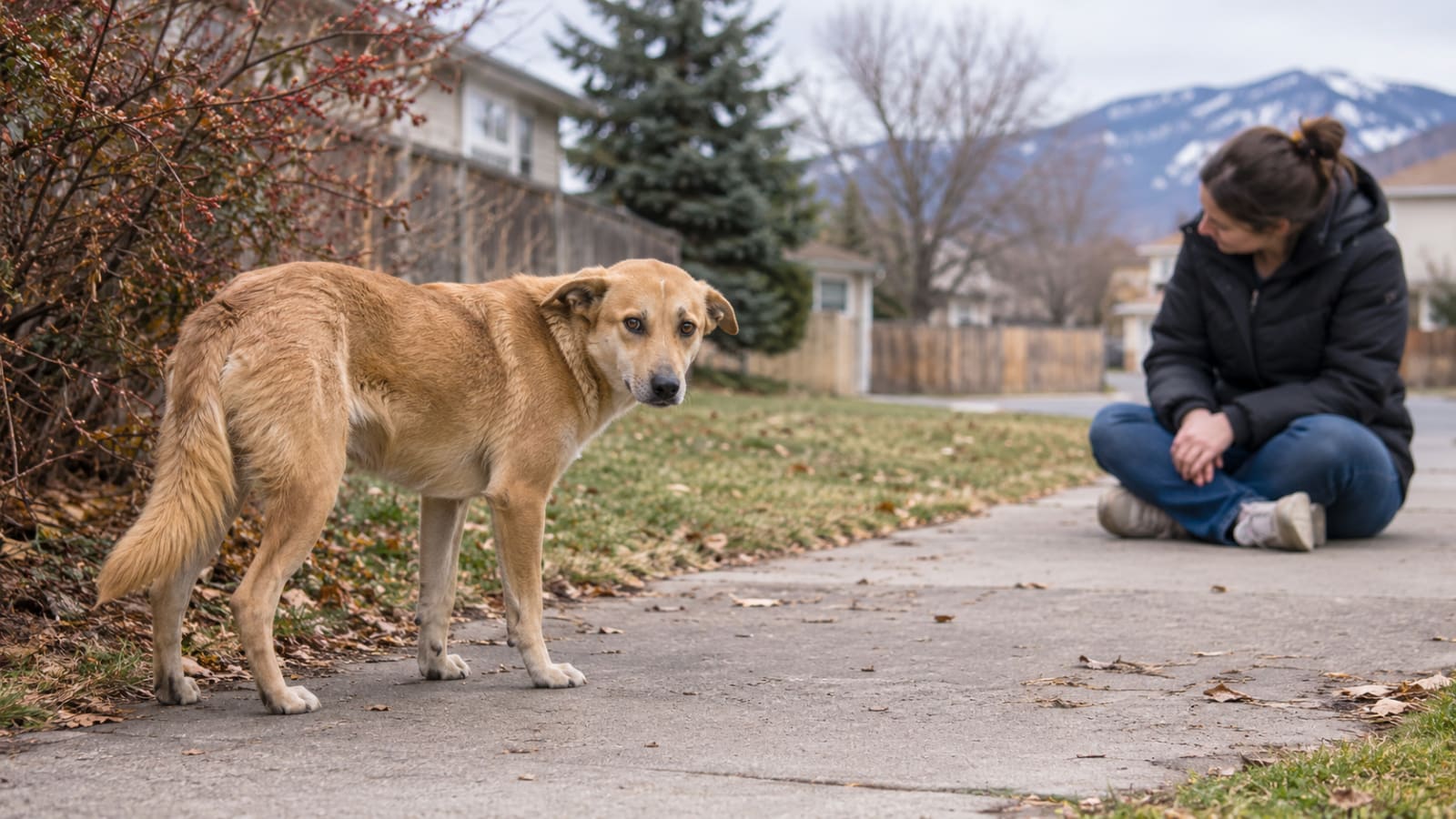
By Lost N Found Paws · Updated 2026-11-12
Why a lost dog may run from the people they know
Seeing your missing dog but being unable to get close can be confusing and frightening. A dog that is normally affectionate or responsive at home may behave very differently after becoming lost, especially if they are already fearful, exhausted, overstimulated, or repeatedly approached by strangers.
Do not assume that a dog running from you no longer recognizes you or does not want to come home. Fear can temporarily become more important than familiar routines. The safest goal is usually to reduce pressure, keep the dog from being pushed into a more dangerous area, and create conditions in which the dog can settle enough to approach.
The same principle applies if you have spotted someone else's missing dog. A well-intentioned attempt to grab or chase a frightened animal can cause the dog to travel farther, cross a road, disappear into difficult terrain, or avoid the area where the owner is trying to recover them.
- Expect frightened behavior even from a normally social dog.
- Treat every confirmed sighting as useful information, even if the dog cannot be caught immediately.
- Focus on calm recovery rather than fast pursuit.
If you see the dog, do not chase
Running toward a scared dog, following closely in a vehicle, surrounding the dog with multiple people, or repeatedly trying to corner them can increase fear and cause continued flight.
If the dog moves away, stop advancing. Give the dog space and avoid turning the sighting into a chase. If the dog is near traffic, unstable terrain, wildlife, or another immediate hazard, contact local animal control or the appropriate local authority and provide the dog's exact location and direction of travel.
- Do not sprint after the dog.
- Do not send a crowd toward the sighting.
- Do not block every escape route and force the dog to choose between people.
- Do not attempt a risky roadside capture.
Use calm, non-threatening body language
When it is safe to remain near the dog, make yourself less threatening and allow the dog to control the distance. Patience is often more useful than repeated movement toward the animal.
- Stop moving toward the dog and remain calm.
- Turn your body partly sideways instead of facing the dog directly.
- Avoid prolonged direct eye contact.
- Sit, crouch, or lower your profile if you can do so safely.
- Keep your movements slow and predictable.
- Allow the dog to look, sniff, circle, or pause without reaching for them.
- If the dog begins moving toward you, resist the urge to rush the final few feet.
Use food carefully to encourage an approach
Highly appealing food can sometimes help a frightened dog become curious enough to move closer. Use food as a low-pressure lure rather than as a reason to advance on the dog.
If the dog is watching you from a safe distance, place or gently toss small pieces of food away from your body at first. If the dog becomes comfortable eating, additional pieces can gradually be placed closer to you. Avoid throwing food directly at the dog's face or making sudden reaching motions.
Food is not appropriate in every situation. Do not use it in a way that draws the dog into traffic, close to aggressive animals, onto unsafe property, or into another hazard.
- Choose small, strongly scented, dog-safe food when available.
- Let the dog decide whether to approach.
- Keep the environment as quiet as possible.
- Stop if the dog becomes more fearful or begins retreating.
Know when not to call the dog's name
Many owners instinctively call, whistle, clap, or shout when they finally see their missing dog. A relaxed dog may respond normally, but a highly frightened dog can interpret loud or repeated calling as additional pressure.
If the dog is already moving toward you voluntarily, a soft familiar voice may be reassuring. If calling causes the dog to freeze, turn away, increase distance, or run, stop calling and return to quiet, non-threatening behavior.
Ask helpers to follow the same plan. A dog that is being called from several directions may become more confused and difficult to recover.
- Avoid shouting or excited voices around a panicked dog.
- Watch the dog's response instead of assuming a familiar cue will work.
- Give every helper the same instructions before they approach the area.
Record every credible sighting
When a frightened dog cannot be safely caught, an accurate sighting can be more valuable than an unsuccessful capture attempt. Consistent reports can help reveal where the dog is spending time and which direction they are moving.
- Write down the exact date and time of the sighting.
- Record the street, intersection, trail, landmark, or other precise location.
- Note the direction the dog was traveling.
- Record whether the dog was walking, running, resting, eating, or hiding.
- Take a photo or video from a safe distance if doing so does not disturb the dog.
- Ask witnesses not to chase the dog.
- Share the information promptly with the owner or the person coordinating the search.
Build a coordinated recovery plan around repeated sightings
If the same dog is repeatedly seen in one area, reduce unnecessary activity around that location. Repeated pursuit by different volunteers can make the dog more cautious and can disrupt a useful pattern of sightings.
Choose one or two people to coordinate incoming reports, map confirmed sightings, and communicate instructions to neighbors. Ask the public to report the time, location, direction of travel, and a photo when possible rather than attempting to chase the dog.
Continue checking local shelters, animal control agencies, veterinary clinics, community lost-pet pages, and found-pet reports. A person who picks up the dog may take them to a shelter or clinic outside the exact neighborhood where the dog was last seen.
- Separate confirmed sightings from guesses or old reports.
- Update searchers when the dog's location changes.
- Use one consistent phone contact when possible.
- Tell helpers clearly when a dog should not be approached or chased.
When professional or shelter help may be needed
Some frightened dogs cannot be safely recovered by simply waiting for them to approach. If the dog repeatedly avoids people, is injured, is moving through dangerous traffic, or has established a predictable location but cannot be secured, contact local animal control, an animal shelter, or an experienced lost-pet recovery organization for guidance.
Humane traps or specialized capture equipment should be selected, placed, and monitored with appropriate expertise. The wrong equipment, an unsafe location, poor monitoring, or an improvised capture attempt can injure the dog or other animals.
In Colorado, local animal-control and shelter procedures vary by city and county. Follow the instructions of the agency responsible for the area where the dog is currently being seen.
- Ask who has jurisdiction in the dog's current location.
- Describe the dog's behavior and any immediate hazards.
- Provide the most recent confirmed sighting information.
- Tell responders if the dog is injured, dragging a leash, or wearing equipment that could become caught.
What to do once the dog comes close
The final moments of a recovery deserve the same patience as the approach. A sudden grab can startle a dog that has spent hours or days avoiding people.
- Remain calm and avoid sudden celebration or loud voices.
- Allow the dog to come close enough to appear comfortable before reaching.
- If the dog is wearing a secure collar or harness and allows handling, attach a leash calmly.
- Move the dog away from traffic and other immediate hazards before making phone calls or gathering a crowd.
- If the dog appears injured, severely exhausted, overheated, unusually weak, or unable to walk normally, contact a veterinarian promptly.
- Once secure, confirm identification and notify anyone coordinating the search that the dog has been recovered.
Make your lost-dog alert easier for witnesses to follow
If your missing dog is frightened or has already run from people, add a clear instruction such as DO NOT CHASE to your lost-pet posts and flyers. Tell witnesses exactly what information you need instead: location, time, direction of travel, and a photo if safely possible.
A simple instruction can prevent several well-meaning people from independently pursuing the dog. Keep your phone available, respond quickly to new sightings, and update public posts when the search area changes.
You can also create a lost pet report on Lost N Found Paws so people checking active reports have a consistent description and contact point.
- Use a recent, clear photo.
- State that the dog may be scared.
- Add DO NOT CHASE when appropriate.
- Ask for exact sighting details instead of general messages such as I saw your dog nearby.
- Remove or update recovery posts once the dog is safely home.