Indoor Cat Escaped Outside? How to Find Your Lost Cat Safely
Learn where a frightened indoor cat may hide, how to search nearby, use sightings and cameras, and bring your lost cat home safely.
By Lost N Found Paws · Updated 2026-11-09
What to do first when your indoor cat escapes
If your indoor-only cat slipped through a door, window, or garage, begin searching immediately around the place it escaped. Look carefully inside your home too if you did not actually see the cat go outside. Then check quiet hiding places close to the exit before moving farther through the neighborhood.
A frightened indoor cat may hide silently even when it recognizes your voice. The most effective starting point is a calm, methodical search, not a crowd of people calling loudly or chasing the cat. Search again at quieter times, notify neighbors, and report your pet missing while you keep looking.
First 30 minutes: a practical escape checklist
These are immediate priorities, not a promise that every cat can be found within 30 minutes. Adjust for darkness, weather, traffic, and your cat's medical needs.
- Close other doors and secure resident pets so no additional animals escape.
- Check closets, beds, furniture, laundry areas, and other indoor hiding places if the escape was not witnessed.
- Note the last confirmed sighting, time, exit point, and any direction your cat moved.
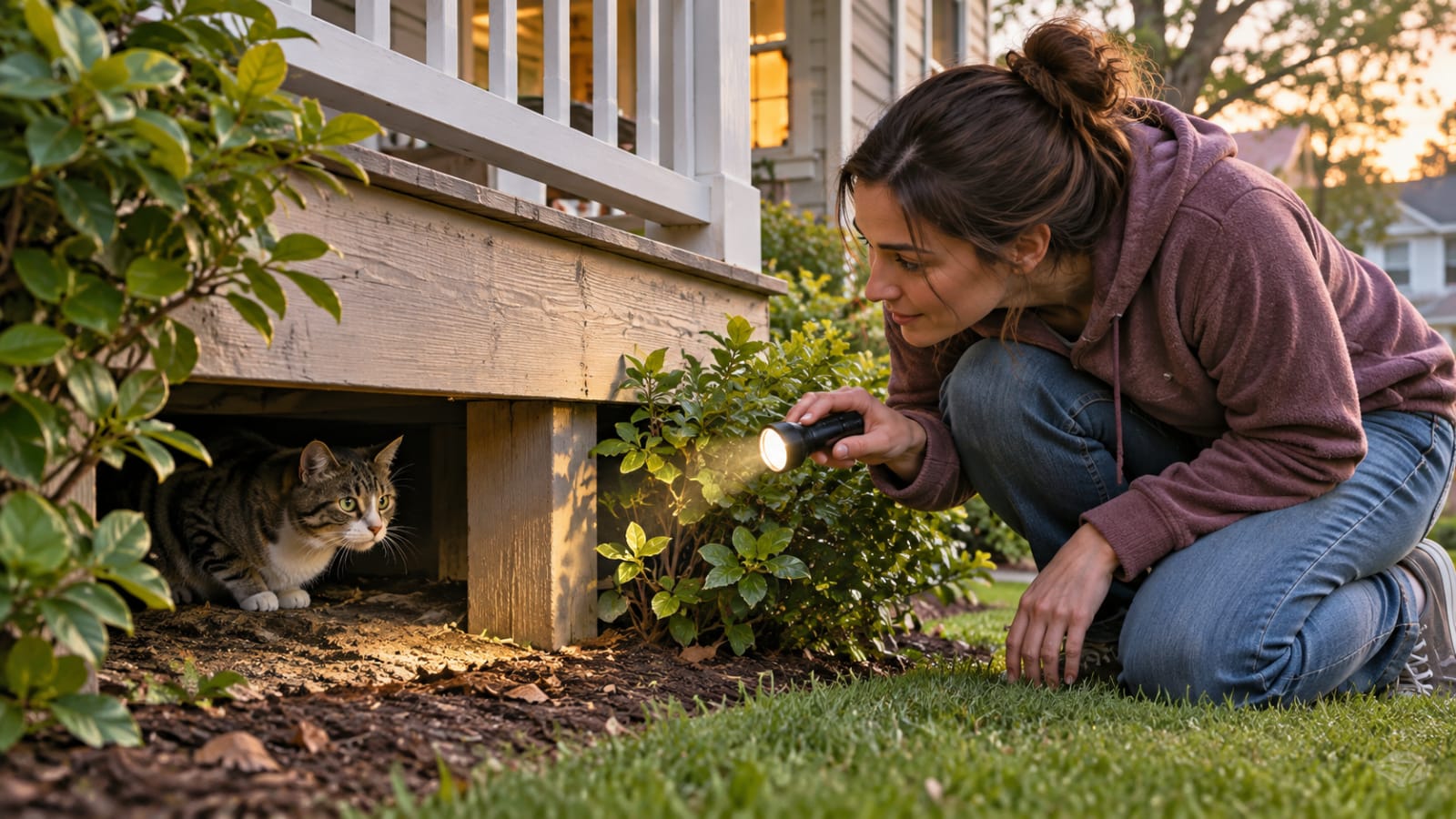
- Search directly outside the exit, inspecting underneath and behind nearby objects with a flashlight.
- Speak softly using your usual voice; then pause and listen instead of calling continuously.
- Ask immediate neighbors to check garages, sheds, decks, and cameras, with their permission.
- Prepare a clear recent photo and start a lost-pet report so sightings can reach you promptly.
Where do lost indoor cats usually hide?
Indoor cats suddenly exposed to unfamiliar outdoor sights and sounds often seek the first secure-looking shelter. Check the spaces closest to the exit carefully, including places that seem too small to hold a cat. A cat can move between hiding spots, so inspect the same areas again later.
Look without reaching blindly into dark holes or moving dangerous equipment. Ask before entering anyone else's property. If a cat is in a storm drain, a wall cavity, near moving machinery, or another hazardous location, request help from animal control or an appropriate professional.
- Under porches, decks, stairs, ramps, and raised foundations.
- Behind bushes, dense landscaping, planters, and wood piles.
- Beneath parked vehicles, around wheel wells, and in garages; ask vehicle owners to check before starting engines.
- Inside open sheds, storage spaces, crawl spaces, or basements where the cat might become trapped.
- Behind trash bins, patio furniture, HVAC units, and other sheltered objects.
- Along fences and beneath nearby outbuildings; use a flashlight to spot reflected eyes.
How far can an escaped indoor cat travel?
Start very close to home, but do not assume your cat cannot be farther away. A 2018 peer-reviewed survey of 1,210 missing cats reported that, among indoor-only cats found alive with recorded distances, the median recovery distance was 39 meters (about 128 feet). In that subgroup, 75% were found within 137 meters (about 450 feet) of their escape point. These figures describe recovered cats in a self-selected survey, not a reliable prediction for any individual missing cat.
The study also found that missing cats with previous unsupervised outdoor access tended to be found farther away. Your cat's personality, any previous outdoor experience, a frightening event, recent moves, terrain, and available hiding places can all change the search area. Begin near the exit, expand house by house, and follow credible sightings even if they are outside the initial radius.
Search the right way: slowly, quietly, and more than once
A physical search is especially important for indoor-only cats. Use a simple search map or notes app to record where you looked and when, then revisit those places at different times.
- Search the home and immediate property carefully, even if someone thinks the cat was seen outside.
- Walk the nearest few houses in each direction and check every sheltered space you can access safely.
- Ask neighbors for permission to search their yards, sheds, and garages; never trespass.
- Use a flashlight under vegetation and structures, including during daylight.
- Check again at dusk, dawn, or another quiet time when a frightened cat may emerge.
- Record sightings with exact times, locations, movement direction, and whether the observer saw the cat directly or on camera.
- Expand the search gradually if close-range checks produce no evidence; keep repeating checks near home.
What if your cat does not come when called?
A silent response does not mean your cat is absent or has forgotten you. Frightened cats may remain completely still and quiet while people are nearby. Sit or crouch at a safe distance, speak in a familiar low voice, and allow long pauses for listening. Try familiar mealtime sounds only if they do not attract other animals or frighten your cat.
If you see your cat, resist rushing toward it. Avoid eye contact that feels threatening, sudden movement, and cornering. Let the cat approach voluntarily when possible, or ask an experienced local cat-rescue volunteer for a safe recovery plan.
Can food, bedding, and familiar scents help?
Some recovery organizations suggest placing a familiar blanket or worn item of clothing near a safe, sheltered entrance. A small amount of strongly scented food can also help, especially if your cat has been seen near the home. These tactics are optional and should support, not replace, an active search.
Monitor any food closely and remove leftovers so you do not attract wildlife, other cats, or pests. Avoid leaving the cat's used litter box outside as a guaranteed scent trail; its effectiveness has not been established and some rescue organizations warn it may attract other animals. Do not leave an exterior door open if doing so would create security, weather, or pet-escape risks.
Use cameras and verified sightings to locate a hiding cat
A doorbell camera, home security camera, or borrowed trail camera can help identify whether your cat returns after dark and which route it uses. Point cameras toward a likely hiding place or a safely monitored feeding spot, and check time stamps rather than relying on a vague report that a cat was seen recently.
If a neighbor reports a sighting, ask for a photo or video if they can provide one without approaching the animal. Note the street, direction of travel, and exact time. Compare coat pattern and distinctive markings with recent pictures of your cat; do not treat every similar-looking cat as a confirmed match.
- Keep a simple log of verified sightings and camera times.
- Ask neighbors to check existing doorbell footage around the escape time.
- Do not send a large group racing toward a shy cat after a sighting.
- Concentrate renewed searches and recovery attempts around repeated credible sightings.
When should you consider a humane cat trap?
If your cat is repeatedly seen but will not approach, a properly sized humane live trap may be useful. Before setting one, ask a shelter, experienced cat rescue, or trained trapper about equipment, placement, local rules, and safe handling. A trap is not the first or only step, and it must never be used as an unattended overnight solution.
Place a trap only where you have permission and can monitor it continuously or at frequent intervals according to expert instructions. Protect trapped animals from heat, cold, rain, and predators. Use only humane equipment; never use glue traps, snares, or harmful devices. If another animal enters, seek expert advice on its safe release. Once your cat is secured, move it to a quiet enclosed area before opening the trap.
Safety warning: do not chase, grab, or put yourself at risk
Do not chase a frightened cat into traffic, climb unstable structures, enter storm drains, handle electrical equipment, or trespass on private property. Never try to pull a cat out of a dangerous cavity by force. Contact animal control, a qualified rescue organization, or another appropriate professional for hazardous recoveries.
If the cat appears injured, has difficulty breathing, seems unable to walk, has had possible toxin exposure, or has been outside during dangerous temperatures, seek veterinary or emergency assistance promptly. A recovered cat that has been missing for an extended period may also need a veterinary assessment.
Report your lost cat and alert the right neighbors
Searching the nearby hiding places and spreading accurate information should happen in parallel. An online post helps others recognize your cat, but it cannot replace physical searching.
- Create a lost-cat report on Lost N Found Paws with a sharp recent photo, neighborhood, date missing, and safe contact method.
- Contact the animal shelter and animal-control agency responsible for the exact place your cat disappeared; ask how lost-pet reports and stray-cat intake work.
- Check local shelter found-cat listings regularly, including neighboring jurisdictions where relevant.
- Notify your microchip registry that your cat is missing and verify your contact details; a microchip is identification, not a live GPS tracker.
- Share a consistent notice with nearby residents, local community groups, veterinarians, and relevant lost-pet networks.
- Ask people to send the sighting time and location rather than trying to catch a frightened cat themselves.
- Update each listing when reliable new information appears and close it once your cat is safely home.
What to put on a lost indoor cat flyer
A useful flyer can be read quickly from a sidewalk or shared on a phone. Lead with a large recent photo and a clear LOST CAT headline. Add the neighborhood or nearest cross streets, when the cat escaped, coat color, distinctive visible markings, and a safe contact method.
Explain that the cat may be hiding and ask neighbors not to chase it. Encourage photos or exact sightings. Avoid posting your full home address, private microchip number, or unnecessary personal information. If someone claims to have your cat, request identifying details or photos before sharing sensitive information or sending money.
- LOST CAT: clear headline and sharp photo.
- Last seen: date and approximate neighborhood or intersection.
- Description: coat color, approximate size, and recognizable markings.
- Instruction: Please do not chase; report sightings with time and location.
- Contact: a phone number or another safe method you actively monitor.
A 48-hour search plan you can actually follow
There is no deadline after which the search is hopeless. This timeline is a practical way to organize early action, and it should be adapted to confirmed sightings and urgent safety issues.
- Hours 0–2: Search indoors and around the exit; inspect immediate hiding places; alert the closest neighbors.
- Same day: File a lost-pet report, notify the appropriate shelter and microchip registry, and prepare a clear flyer.
- First evening: Repeat the nearest-property search in quieter conditions with a flashlight; review doorbell camera footage.
- Next morning: Ask additional neighbors to inspect sheds and garages and check any new sightings.
- Hours 24–48: Revisit earlier hiding places, expand outward carefully, refresh the flyer, and consider monitored cameras or expert-assisted humane trapping if sightings justify it.
- After 48 hours: Continue searching, following leads, and checking shelter and community reports; do not assume the cat is gone for good.
How to avoid lost-cat recovery scams
Unfortunately, missing-pet posts can attract scammers. Be suspicious of anyone demanding an upfront reward, requesting gift cards or payment apps before proving they have your cat, or asking you to share a one-time verification code. Fraudulent messages may claim to represent an animal shelter or veterinary clinic.
Request a current photo or a private identifying detail before arranging a reunion. Independently call any shelter using the number on its official website, not a number supplied in an unexpected message. When possible, arrange a safe handoff through a shelter or veterinary clinic.
Frequently asked questions about escaped indoor cats
Where do indoor cats hide after escaping? Many initially hide very close to the exit, such as under a deck, in dense shrubs, beneath a vehicle, or inside a neighbor's shed. Search those spots repeatedly, but widen the search when evidence points farther away.
How long will a scared cat hide? There is no fixed duration. Some cats emerge once the area becomes quiet; others remain hidden longer or move between hiding places. Recheck at dusk, dawn, and quiet nighttime periods while continuing an active search.
Will my indoor cat come home on its own? Some cats return to the entrance, but you should not rely on waiting. Search physically, notify local shelters, and monitor credible sightings at the same time.
Should I put my cat's litter box outside? There is no good evidence that a used litter box reliably guides a lost cat home, and some rescue organizations caution it may attract other animals. Prioritize searching, safely monitored food if appropriate, and familiar bedding or clothing instead.
What if my cat sees me but runs away? Fear can override familiarity. Do not chase. Remain calm, note its location, monitor the area, and seek help from an experienced cat rescuer if a humane trap is needed.
How far should I search? Begin at your home and the closest few houses. A published study reported a median found-alive distance of 39 meters among indoor-only cats with distance data, but individuals may travel much farther. Expand gradually and follow reliable sightings.
After you find your cat: safe recovery and prevention
Move your cat into a secure, quiet room with fresh water, a litter box, and a familiar resting area. Check for obvious injuries and contact a veterinarian if your cat has been missing for a prolonged time, seems unwell, or has special medical needs. Do not force food or water into an exhausted or distressed cat.
When your cat is safe, update the lost-pet report and other alerts so neighbors and shelters know the search has ended. Review how the escape happened: repair damaged screens, check doors, keep the microchip registration current, and consider an appropriately fitted breakaway collar with an ID tag.
Sources and evidence behind this guide
This guide draws on the peer-reviewed study 'Search Methods Used to Locate Missing Cats and Locations Where Missing Cats Are Found' (Animals, 2018; DOI: 10.3390/ani8010005), which studied owner-reported outcomes for 1,210 missing cats. Its distance figures describe a specific surveyed group and do not guarantee where any one cat will be found.
Practical search and safety guidance was cross-checked against Humane World for Animals, 'How to Find a Lost Cat'; SPCA of Northern Virginia, 'Tips for Finding Lost Indoor-Only Cats' (updated July 2026); and Best Friends Animal Society, 'How to Find a Lost Dog, Cat, or Other Pet' and 'How to Find a Lost Cat.' Procedures and local shelter policies can change, so confirm them directly with the responsible agency.